
A tool that reads job adverts and spots work that could be automated
When a small business advertises for an administrator or an accounts assistant, the advert lists exactly what's taking up their time. We built a tool that reads those adverts, works out which tasks software could handle, and ranks the businesses where it would help most.
The idea
A job advert is a business describing its own problem in its own words: "answering the phone and booking appointments", "chasing unpaid invoices", "keying orders into the system". When those tasks make up a big part of a new role, there's often a cheaper, faster answer than another salary.
Reading hundreds of adverts by hand to find those businesses isn't practical. This tool does the reading and gives a person a short list worth looking at.
How it works
- CollectRecent adverts for admin, finance, customer and data roles across UK cities.
- FilterRemoves recruitment agencies, large employers and remote roles, and merges duplicates across boards.
- AnalyseAI splits each role into tasks and rates how automatable each one is.
- ScoreRanks each business from 0 to 100 as an opportunity.
- BriefWrites a one-page brief per business and a ranked list.
- Only official data. Adverts come from the Reed and Adzuna APIs. No scraping of sites that don't allow it.
- Signals that matter. A role re-advertised after 30 days scores higher: they couldn't fill it, or the first hire didn't work out.
- A simple dashboard. Browse and filter leads, open a business's full detail, track status and notes, and run the pipeline in one click. The settings page estimates API usage before anything runs.
Screens
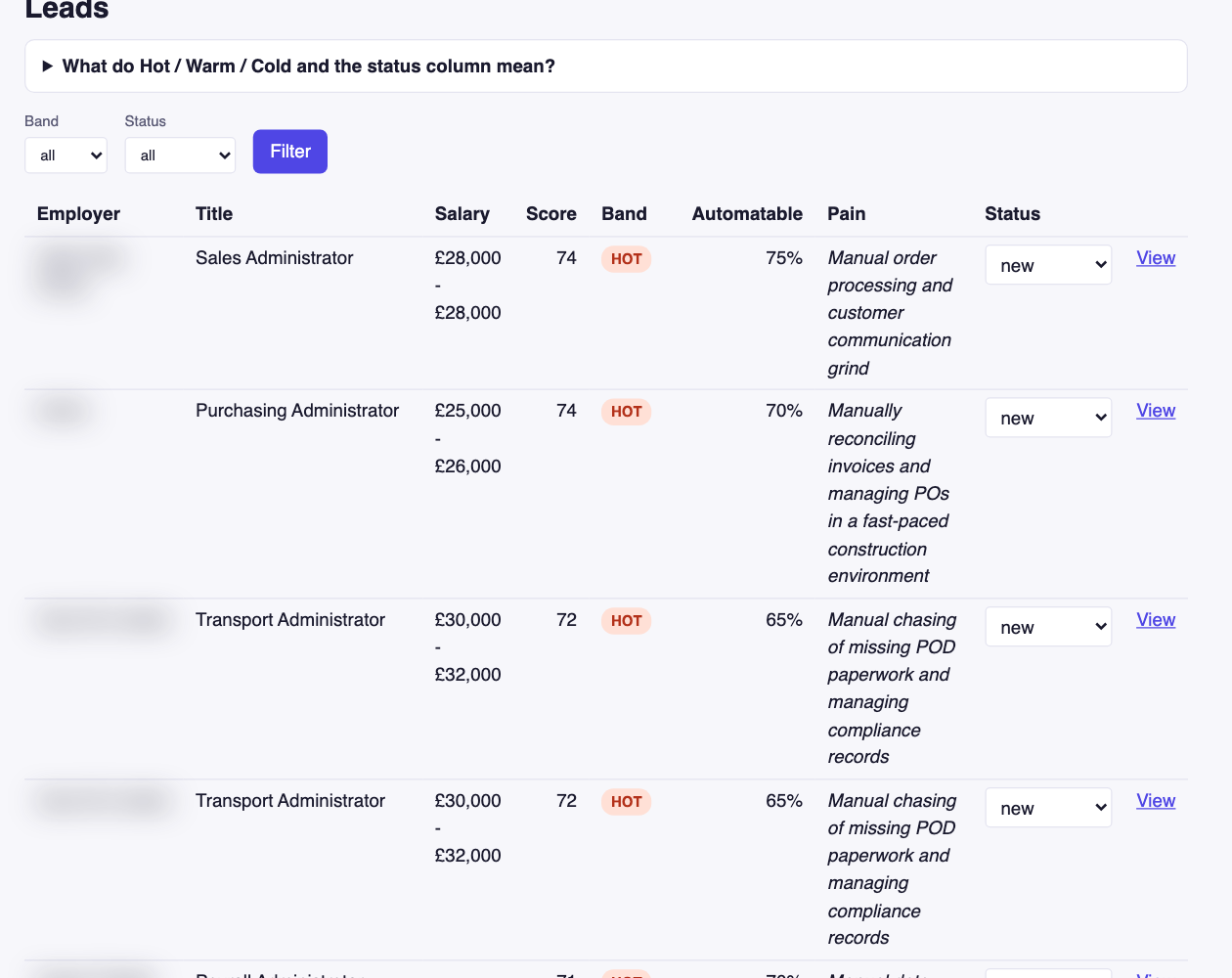
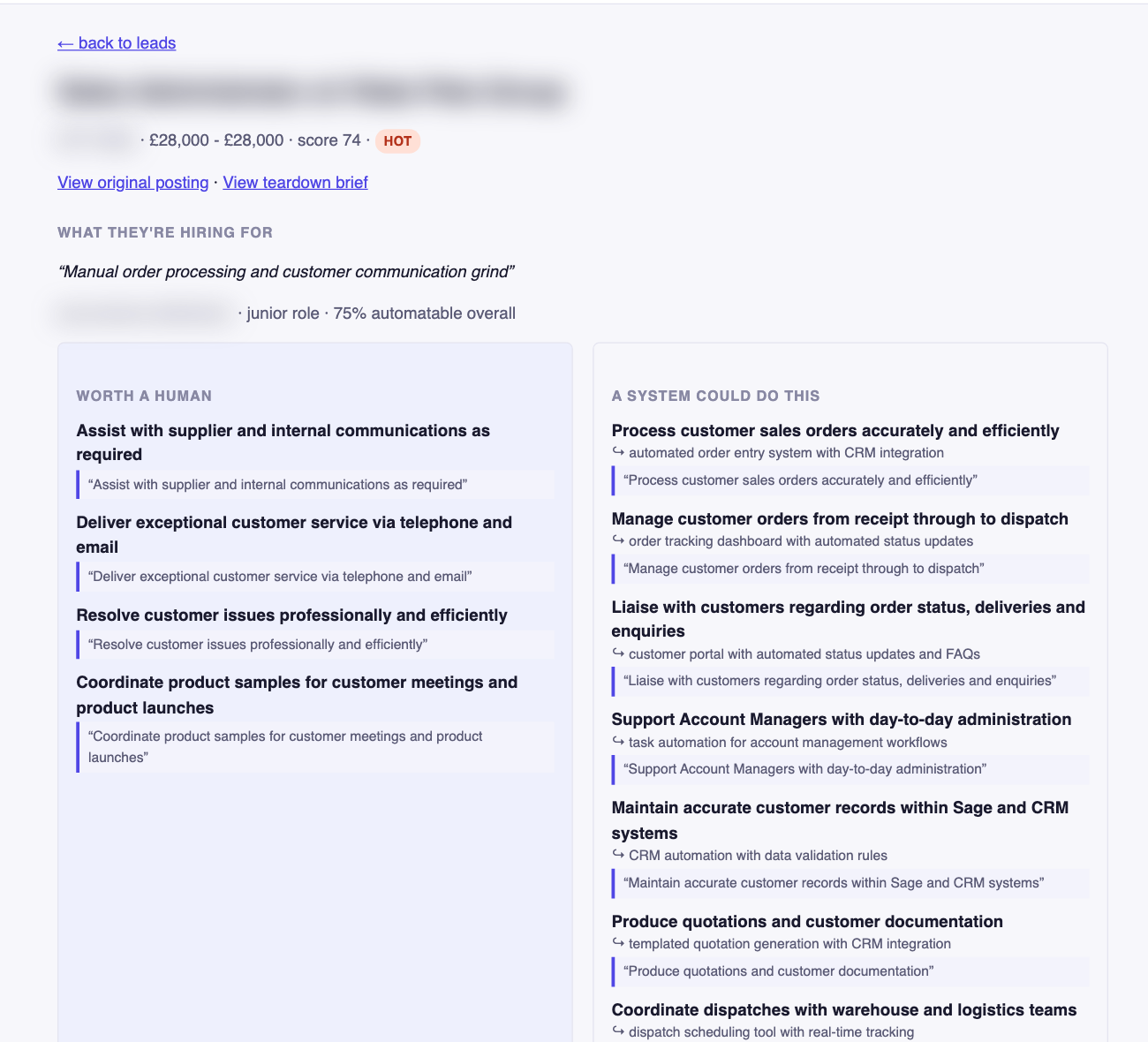
Real adverts from the Reed API. Employer names, locations and sectors are blurred.
The brief
Each brief quotes the business's own advert back and splits the role into what software could take over and what needs a person. For example, for an illustrative physiotherapy clinic hiring a receptionist:
Answering calls and booking appointments: highly automatable with online booking and reminders.
Chasing unpaid invoices: highly automatable with an automatic reminder sequence.
Greeting patients at the front desk: needs a person.
About 55% of the role could be automated.
The rule is that a finding which could apply to any business doesn't make it into a brief. Everything has to come from what that business actually wrote.
Built carefully
- Nothing is analysed twice. Every result is cached, so costs stay low and reruns are instant.
- Structured, checked AI output. The AI returns strict, validated data rather than free text, so the scoring can't be thrown by a badly formed answer.
- Can run fully locally on a free, private AI model instead of a paid one.
- Tested with an automated suite and strict code-quality checks on every change.
Spending hours reading so you can find a few that matter?
Whether it's adverts, enquiries, tenders or applications, tell us about it. In 15 minutes we'll tell you honestly whether AI can take the first pass.